 Ocean BreezeSep 22, 20256 min read
If you buy through our links, we may earn an affiliate commission. This supports our mission to get more people active and outside.Learn about Outside Online's affiliate link policy
I didn’t fully appreciate the impact of practicing yoga on those who do resistance training until I encouraged my husband, an avid powerlifter, to try including it in his morning workout routine.
Mobility is more than just being bendy—it’s also having the strength and stability to use your range of motion functionally, which is critical for exercises such as squats and deadlifts.
At first, he was hesitant. Although he’s occasionally joined me for a class when we travelled or served as my practice student when I was creating a new class, he’s always preferreddumbbellsand barbells to a yoga mat. It’s like how I sometimes grumble aboutstrength training, even though I know it’s good for me. That’s how I came to realize that many of us tend to shy away from the type of movement our bodies need most.
Mobility work is key for anyone who lifts, whether you’re abodybuilderor the occasional gym-goer. Mobility is more than just being bendy—it’s also having the strength and stability to use your range of motion functionally, which is critical for exercises such as squats and deadlifts. In exercise, mobility is the active ability to move a joint through its full range of motion with control.
Earlier this year, when my husband’s limited ankle andhip mobilitystarted holding back his squat depth, I showed him a few simple yoga mobility moves he could do in under ten minutes. To his surprise, it worked.
Within a few weeks of practicing daily, his squat depth improved, his nagging hip pain faded, and he broke through plateaus that had been frustrating him for months.
Improving your mobility can pay off in even more ways.
Practicing yoga for mobility allows you to move more fluidly under load and avoid muscle compensations that can affect form.
Greater ankle and hip mobility allows you to squat below parallel (i.e., your hip crease goes lower than the top of your knees), which maximizes glute and quadriceps engagement. Similarly, less-tense hamstrings can better support a proper deadlift hip hinge.
Also, upper spine (thoracic) mobility creates a stronger bench press arch, which can enhance shoulder stability and chest muscle activation.
Practicing yoga for mobility wakes up the smaller stabilizer muscles that gym-goers often overlook. This helps reduce awkward missteps under load.
Combine that and all of the above with yoga’s ability to boost circulation and bust stress, and you’ve got a recipe for enhanced recovery and fewer injuries. In a fitness culture that often encourages people to identify with one style of training, it’s worth remembering that a balanced approach pays off.
Below are yoga for mobility poses lifters can add to their routine to increase range of motion, prevent injuries, and hit new PRs—no hour-long class required. You can string these poses together for a sequence that you repeat two or three times before or after your workout, or you can add specific ones to your routine.
Focus on moving with your breath and being aware of where you’re tensing and releasing in each posture.
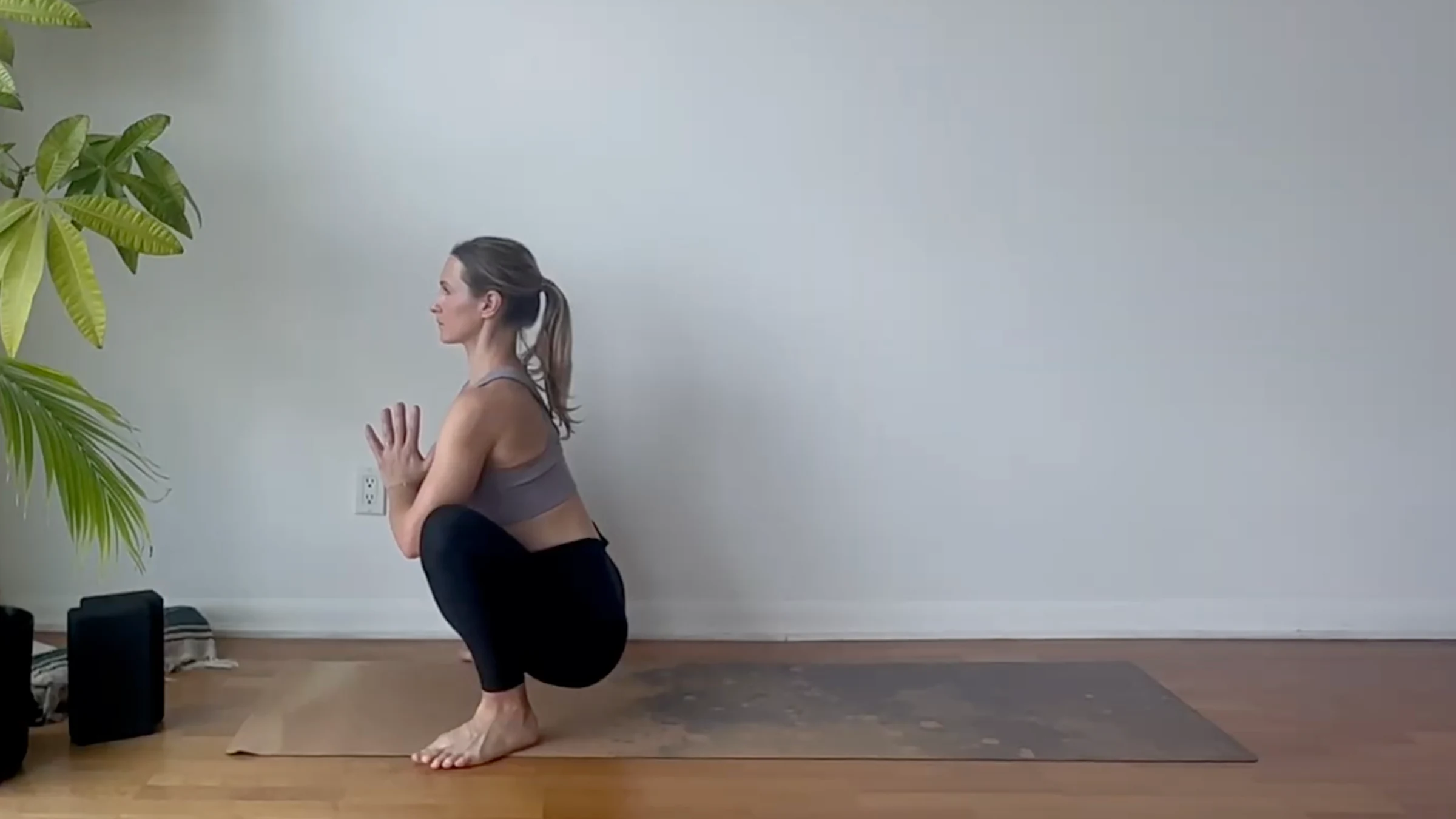
Why This Move Works: One of the biggest challenges lifters face is hitting depth in a squat, which requires ample dorsiflexion of the ankle and open hips.Squat Poseis one of the most effective postures for stretching the Achilles tendons, calves, and inner thighs while also activating and opening the hips.
• Step your feet slightly wider than hip-width distance apart with your toes angled out. • Inhale as you lift through the waist. • Exhale as you bend your knees, sinking your hips as low as is comfortable while tracking your knees over your toes. Keep your chest lifted and spine long as you gaze forward. • You have the option to press your palms together in front of your chest and use your elbows to assist your knees open gently.
(FYI: If you need to ease some calf tension and are struggling to keep your heels down on the mat, slide a blanket, folded towel, or even a weight plate underneath them.)
Why This Move Works: Mobility in the thoracic spine and chest is crucial for lifts that require you to retract your shoulder blades, such as a bench press or low-bar back squat.Cobra Posestrengthens spinal extensors while opening the chest in a safe, supported way.
• Lie on your stomach with your palms underneath your shoulders. • As you inhale, press your feet into the mat, draw your navel toward the spine, and lift your chest off the mat while drawing your shoulders back. Gaze forward. • You should feel as if you’re pulling your chest forward between your palms. • Exhale as you lower your forehead to the mat. • Repeat once or twice.
Why This Move Works:Extended Puppy Posetargets tight shoulders and opens the upper spine, which makes it an excellent stretch for anyone looking to improve their overhead press.
• Come to hands and knees with your shoulders stacked over your wrists and hips stacked over your knees. • Inhale as you walk, your palms forward while keeping your hips above your knees. Your arms will be extended with your palms facing down. • Exhale as you lower your chest and forehead toward the mat, breathing into the stretch and drawing your shoulder blades back. • Wrap your triceps down away from your chest and toward the mat to externally rotate your shoulders.
Pro-tip:place your elbows on blocks and bring your palms together overhead, drawing them toward the back of your head.
Why This Move Works: Tight hamstrings can compromise deadlift form, forcing the lower back to work harder than it should and risking strain.Downward-Facing Doghelps release the hamstrings and calves while building shoulder stability.
• From hands and knees, inhale as you press your palms into the mat and lift your hips up and back. • You can pedal your feet by bending one knee at a time or keep both knees bent to release tension on your hamstrings and prioritize stretching the lower back. • Stay here for several breaths, sending the tailbone high, gazing toward the navel, and pressing your heels gently toward the mat. (It’s OK if they don’t touch it.)
Why This Move Works: Tight hip flexors are a common gripe among weight lifters as well as those who spend a good portion of their day sitting. Having open hip flexors can be helpful for moving through your full range of motion in lifts such as Bulgarian split squats and hip thrusts.
Most of all, hip flexor stretches can help improve your overall form, reducing issues including lower back and knee pain.Low Lungecan do all of that while also helping improve your posture.
• From Downward-Facing Dog, exhale as you step your right foot forward and lower your left knee to the mat. • Inhale your arms overhead, keeping your shoulders relaxed as you gaze forward or up toward your thumbs. • Square your hips to the wall in front of you. • To intensify the stretch, let your hips sink a little lower toward the mat. (Feel free to place your hands on two blocks, one on either side of your hips, for support, or keep your hands on your front thigh.) • Stay for several breaths before repeating on the left side.
Want moreOutsidehealth stories?Sign up for the Bodywork newsletter. Ready to push yourself? Enter MapMyRun’sYou vs. the Year 2025running challenge.